Packing for a Ride with Changeable Weather
Packing for a ride with changeable weather means choosing layers for likely shifts in rain, wind and temperature, without carrying a duplicate wardrobe.
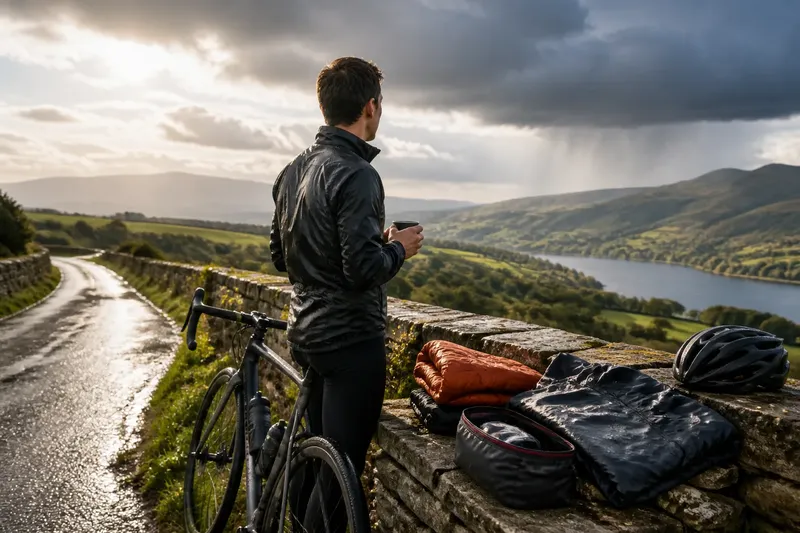
Packing for a ride with changeable weather starts with a simple question: what change would make this ride uncomfortable or difficult to continue? A jacket for showers, a warm layer for a stop and gloves for a cold descent solve different problems. Packing all three by habit solves none particularly neatly.
Use the forecast to identify the likely sequence of conditions, then match clothing to the transitions you expect. A dry start followed by rain calls for a different choice from a cool ride with a long outdoor pause. The aim is to cover the plausible changes, not every mood the sky might adopt.
What changes in the weather matter most?
Check the forecast for the route and the time you expect to ride, not just the conditions outside your door. Look for rain, wind, a cooler return journey or a change after sunset. Treat the forecast as a planning aid: if it points to conditions that do not suit your route or experience, changing the ride may be wiser than adding another layer.
Think in terms of what each change does to you. Rain can leave clothing damp; wind can make an exposed stretch feel colder; stopping can remove the warmth generated by riding. A shell and an insulating layer are not interchangeable, much as a lid and a coaster both belong near a mug but do different jobs.
Which layers answer which problem?
A waterproof shell is for keeping rain and wind off your other clothing. A light insulating layer adds warmth, especially when you slow down or stop. Gloves can help when hands become uncomfortable in cool, wet conditions. Choose items for distinct jobs rather than carrying two versions of the same solution.
Consider how the layers work together. A thin warm layer beneath a shell may be easier to adjust than one bulky garment. If you are likely to be active throughout and the route offers shelter, a shell alone may be enough. If a café stop or outdoor wait is part of the plan, a dry layer for that pause may matter more than extra riding kit.
How should you decide what to pack?
- Check the forecast along the route. If rain is likely and shelter is scarce, take a shell; if conditions look dry and shelter is easy to find, consider leaving it behind.
- Check for exposed sections or strong wind. If the route leaves you exposed, add a suitable windproof layer; if it stays sheltered, avoid carrying a second outer layer for the same job.
- Check whether the ride includes a long stop. If you will be stationary outdoors, pack a dry warm layer; if the stop is brief and sheltered, that extra layer may not earn its place.
- Check whether the return is likely to be cooler. If the forecast suggests a colder journey home, carry a layer you can add; if temperatures are expected to remain similar, use the clothing already planned.
- Check your gloves and other exposed clothing. If rain or cold would make your hands uncomfortable, take gloves suited to those conditions; if they are already comfortable in the forecast, leave spare pairs at home.
- Check whether wet clothing would sit against dry essentials. If so, pack a waterproof pouch or reusable bag; if your bag already keeps damp items apart, use that compartment instead.
- Check whether the route can be shortened safely. If an easy alternative exists, you can pack for the planned ride and revise the route if conditions worsen; if not, choose a more cautious route or postpone the outing.
What should you do when the forecast is uncertain?
Should I carry a waterproof jacket if rain is only possible?
Consider how exposed the route is and whether you can find shelter or turn back. If getting wet would leave you with few comfortable options, a compact shell is a sensible reserve; if shelter is close and the ride is easy to shorten, you may decide to leave it out.
Is one warm layer enough for riding and stops?
That depends on whether it is comfortable both while moving and while stationary. If one layer becomes too warm on the bike or too cool at a stop, combine a thin insulating layer with a shell so you can adjust.
How do I keep a damp shell away from dry clothing?
Put it in a separate waterproof pouch or reusable bag after the rain passes. If no pouch fits your load, keep the shell in an outside compartment and check that it cannot wet food or spare clothing.
Should I pack differently for a café stop?
Think about whether you will sit outdoors or cool down while walking between places. If so, carry a dry layer that is comfortable off the bike; if the stop is indoors and brief, your riding layers may be enough.
How does the choice work on a real plan?
Imagine you plan a familiar afternoon ride with a café stop, a sheltered route and a forecast that starts dry but allows for light showers. You already have a light base layer and gloves suitable for the expected conditions. You add a compact shell for rain and put a dry insulating layer in a reusable waterproof pouch for the stop. You leave a second jacket at home because it would duplicate the shell’s job. The resulting load covers rain and cooling down without carrying two outer layers.
If the forecast changes before departure and now points to prolonged rain on an exposed route, the same plan may no longer make sense. Choose a shorter, sheltered route or postpone the ride rather than treating extra clothing as a substitute for a sound plan.
When is a different ride the better choice?
If conditions are expected to worsen, the route has little shelter or you are unsure you can manage the demands, consider a different time, a shorter route or another day. A fuller bag does not make every combination of weather and route suitable.
For packing for a ride with changeable weather, give each item a specific job: keeping rain off, adding warmth, or staying comfortable during a stop. If two items answer the same problem, leave one behind. That small decision keeps the load clear and makes the useful layer easier to identify when the sky changes its mind.